
Most homes aren’t unhealthy because of one big problem—they’re unhealthy because of dozens of small ones, happening in different places, at different times.
That’s the shift behind the Harm Paradigm.
Instead of treating indoor air quality as a box to check—meeting minimum ventilation rates or tracking a single pollutant—it asks a better question: what is actually causing harm to the people living here, and where is it happening?
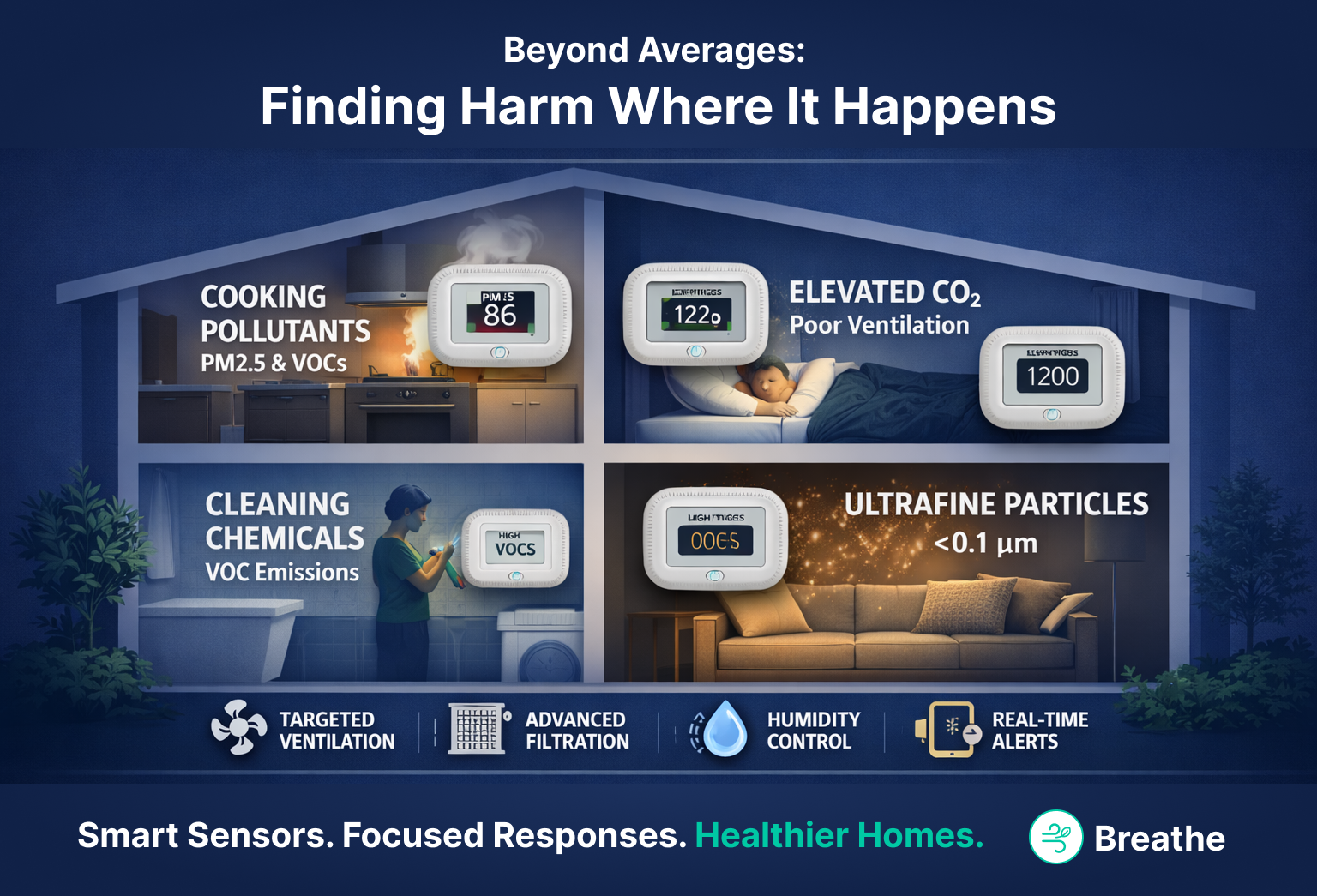
Cooking in the kitchen. Cleaning products in a bathroom. A bedroom with elevated CO₂ overnight. Ultrafine particles drifting through the home. Each space tells a different story—and each requires a different response.
This is where Breathe aligns with the future of IAQ.
Breathe uses distributed sensors throughout the home to move beyond averages and assumptions. It creates real-time awareness of pollutant sources, intensity, and exposure—room by room. That means the system doesn’t just react… it responds with purpose:
• Targeted ventilation where pollutants are generated
• Filtration where particles are most harmful
• Humidity control where biological risks emerge
• Smarter decisions that balance health and energy
Because not all air is equal—and not all harm is either.
The Harm Paradigm makes one thing clear: the goal isn’t just cleaner air. It’s reducing human impact.
And that only happens when you can see what’s really going on inside the home—and respond accordingly.


